EXPECTATIONS
Its a New Year

2026 is here with a glare of new headlines. The future feels overexposed by urgency and alarm. Optimism is never announced but has to be rebuilt. Expectations must be spoken out loud again, even when they feel out of fashion.
We enter 2026 insisting on hope as a form of action. Not naive hope, but the kind forged through transformation. The future is not something we wait for; it is something we connect from collaboration and responsibility.
Again this year, we commit to forming new relationships and strengthening communities. To working with value-driven projects that insist architecture matters - amid political and social turbulence. The city has not stopped listening, even if the noise around it has grown louder.
This year encapsulates 20 years of building Cobe. 240 months of work, experience, and learning through planning and building cities. A year to look back, reflect, and celebrate 7,300 days of dedication to architecture and urban environments. A moment to unveil and share insights from projects and situations (crises included) overcome across places, cities, regions, countries, and continents, in a world in constant transformation. 175,200 hours of hanging in as architects, urbanists, and landscapers. 10,512,000 minutes that have shaped us as an office and as a working culture. An absurdity of seconds at our desk, in workshops, at meetings on construction sites; energized, exhausted, optimistic, frustrated, proud. But most of all Meaningful Time embedded somewhere in the built environment. In streets, squares, buildings, landscapes.

EUROPE ENTERS the conversation insistently this year. Not only as geography, but as an unresolved question. What does it mean today for us to be European - beyond the national? What remains of The Image of Europe? The ambitious project by OMA in 2007 for the Dutch presidency of EU. Our continent is rich and dense from culture, language, philosophy, and cities - walkable, layered, authentic. Yet its economies, landscapes, and territories are under pressure.
The European city stands at the center of this tension. A form of urban heritage without equal, but not immune to erosion. Preservation alone is not enough; transformation must become a cultural project.
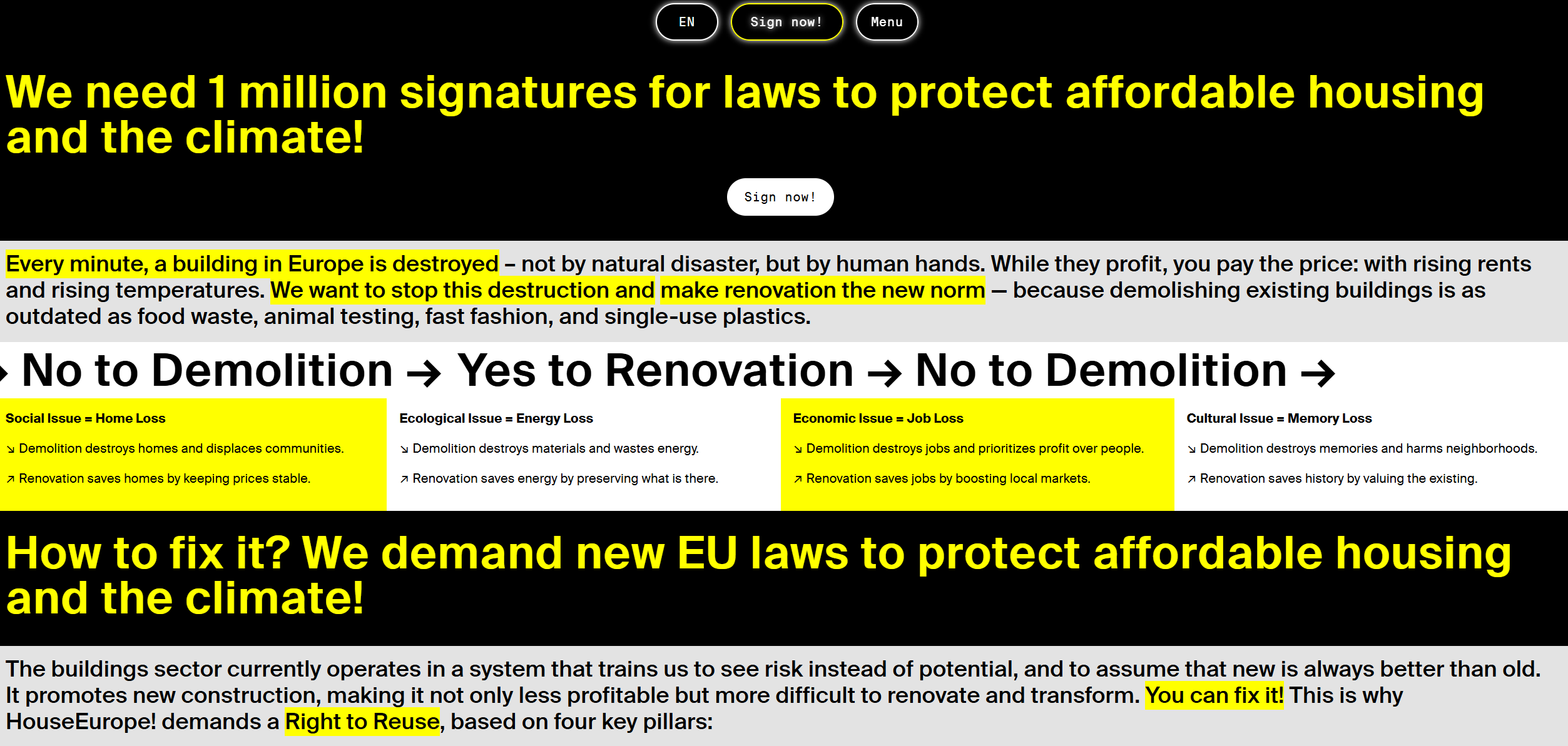
We support House Europe—resisting demolition and advocating for the retrofitting of Europe’s built heritage. Not as an act of conservation nostalgia, but as a critical response to resource scarcity, social and cultural responsibility. Reuse is not compromise; it is intelligence.
Power to renovation! Sign now for new EU laws that promote reuse of existing buildings. https://eci.ec.europa.eu/052/public/#/screen/home
TRANSFORMATION remains our central theme. A word that spans scales—from buildings to landscapes, from neighbourhoods to regions. In May, we will open an exhibition at Architektur Galerie Berlin, sharing our work and experiences with ‘Transformations’ as both process and practice.
The city is never finished - but in constant creation.
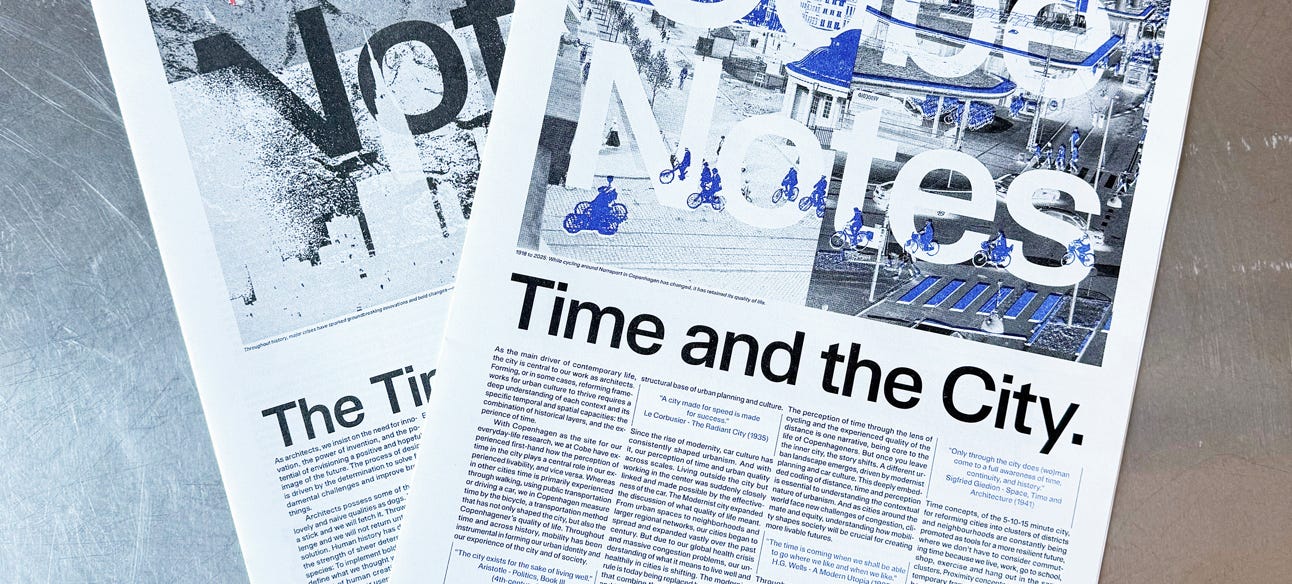
AFFORDABILITY is another conversation that grows louder in 2026. Across the globe, housing crises reshape politics and everyday life. Copenhagen is no exception. Even here, a welfare system designed to balance social equity is beginning to fracture. The welfare city shows signs of fatigue. The question is no longer only how we build, but for whom, and at what cost. Our next Cobe Notes - On Paper, released beginning of the year, will engage with social awareness, affordability, and housing. It will look at the social, spatial and material resources cities have accumulated over centuries, how they connect people and environments, how they sustain cultures, and how they might still do so.
So despite the chaos, we remain optimistic. Not because the future is clear, but because it is still open.
Because time, when acknowledged, can still be shaped.